

Gender Metaphysics 101: "What is a Woman?"
Content warning: transphobia

DISCLAIMER: Even if you disagree with my particular understanding of gender metaphysics, there is no reason for anyone to deny the rights of human beings to have access to healthcare that is clearly beneficial and potentially life saving.
There are few things that seem more doubtful in the UK at the moment than the protection of the rights of transgender people. I thought it would get better now that Labour’s in power, but shortly after getting into government, Keir and his mates banned puberty blockers for transgender youth,1 citing the Cass review, despite the fact it never called for that.2
The so-called “gender critical” movement has steadily been growing in the Western world, reaching a pinnacle with Matt Walsh’s 2022 documentary “What is a Woman?”, which became somewhat of an internet phenomenon. This gave licence for a whole new level of hate spewed towards LGBTQ+ folks in the U.S. Despite this, somehow Britain has now become known as the front runner of transphobia, to the extent that queen of the TERFs3 herself, J.K Rowling, is being quoted in the U.S senate.4 Its not a good time to be a transgender person to say the least.
This is why I believe it is time for the left to seriously start paying attention to the metaphysics behind their claims. Chanting “trans women are women” is no longer cutting the mustard. Left-wing politicians are getting flustered on the regs by what appears to be a simple primary school level question; “can women have penises?”. I should say from the outset that I am someone to used to hold gender critical views. I did so not because I held any hatred towards trans people, I did so for metaphysical reasons. I simply couldn’t make sense of the claim that “men could become women”. To my shame, I found Ben Shapiro and his ilk quite convincing on this point.
There is a way out however. The best thing I ever did was actually listen to trans people speak about their experience with an open mind, instead of relying on right-wing ideologues to feed me over-simplified narratives. So, for those who are reading who are on the gender critical side, I’m not here to call you a transphobe or condemn you, but I hope I can show you a different way forward. In this article I intend on demonstrating that the metaphysical claims that lie behind transgenderism are logically coherent and if rejected, lead to significant problems.
Defining Sex and Gender
For many people, attempting to understand the distinction between sex and gender is fraught with misunderstandings and oversimplifications. Left-wing positions on this matter are constantly caricatured by right-wingers, and sometimes us lefties don’t do ourselves any favours (looking at you Tik-Tok). From the outset, its important to say that most trans affirming people absolutely recognise the existence, and importance of biological sex. Whether one thinks sex is strictly binary, or exists on a spectrum (as some biologists think), its clear that there is such a thing as sex that the doctor recognises when they assign you ‘male’ or ‘female’ at birth. For the purposes of this article, I am going to treat sex as broadly binary. Of course, its also necessary to recognise the existence of intersex people, but for the sake of brevity I won’t be diving into how this relates to gender.
So what is sex? Biological sex essentially refers to one’s primary sex characteristics (whether one has a P or a V) and chromosomes. That’s about it. Gender on the other hand, is made up of 3 sets of attributes;
Gender identity: how one perceives their gender.
Secondary sex characteristics: this includes physical attributes like height, bone structure, voice pitch, hair growth, body fat distribution, etc.
Gender expression: how one performs their gender, including how one dresses, how one speaks, one’s mannerisms, social roles, etc.
The thing we call gender, is a big mix of all of these attributes. What we as a society consider as being a “gendered” attribute can and does change over time and cultures, as can what we consider to be typical of men vs typical of women. Just a trivial example, the colours pink and blue, were originally attributed to the opposite gender that we associate them with now. Also, clothes like tights and high heels were at one point distinctly men’s clothing. This is why gender is considered a social construct. Not because it isn’t real or associated with physical characteristics, but because it is essentially an arbitrary set of attributes that serves a particular social function. One could at least imagine a future where our conceptions of “man” and “woman” are radically different than they are now, or even entirely non-existent.
Now, a couple of things. Firstly, unlike some lefties, I don’t believe gender is entirely determined by one’s gender identity. That idea is resting upon post-modern presuppositions that I don’t hold. I believe that one’s identity is a mix of internal and external perceptions. To put it in linguistic terms, the category “man”, must have an external referent that is beyond internal perceptions. Otherwise there is no point on “man” or “woman” being social categorisations. Secondly, I believe that secondary sex characteristics are a part of gender, not a part of sex. This is for two reasons. Firstly, how one’s secondary sex characteristics present varies widely within the male, female, and intersex populations, to the extent that saying something like “males are tall”, is a gross oversimplification. Secondly, secondary sex characteristics are not downstream from one’s biological sex to the extent required to put them in the same category.
Are Sex and Gender Separate?
Okay, now we have a basic understanding of what sex and gender are, and how they are distinct, I now turn to the question; are they separate? The reason this is an important question is because for the anti-trans narrative to work, gender must be fundamentally determined by one’s sex. As I said above, gender is a social construct, and can change across time and culture. What this implies is that this social category we call “gender” is not necessarily rooted in some objective biological fact. If it was, our conception of gender would be mostly stable. It seems problematic then to reduce “womanhood” or “manhood” down to one’s biological sex.
If you are struggling to wrap your head around the idea of gender as social category, it might be helpful to consider the category “mammal”. Wikipedia defines a mammal as:
“…a vertebrate animal of the class Mammalia. Mammals are characterised by the presence of milk-producing mammary glands for feeding their young, a broad neocortex region of the brain, fur or hair, and three middle ear bones.”
Question for the reader; what do humans and whales have in common? Not a lot right? Well, according to scientists, they fit into the same category of animal. This is because we share enough of the same characteristics to justify us being put in the same category or classification of animal. Notably however, the category mammal is open to some flexibility. Famously the duck-billed platypus is considered a mammal, despite not giving birth to live young. When scientists first discovered the platypus, they were pretty shook. They weren’t sure what to do with it. Some even suggested putting these positively weird dudes in a category all on their own. But, ultimately they decided to consider them a mammal, because that was a useful category to place them in for the scientific process.
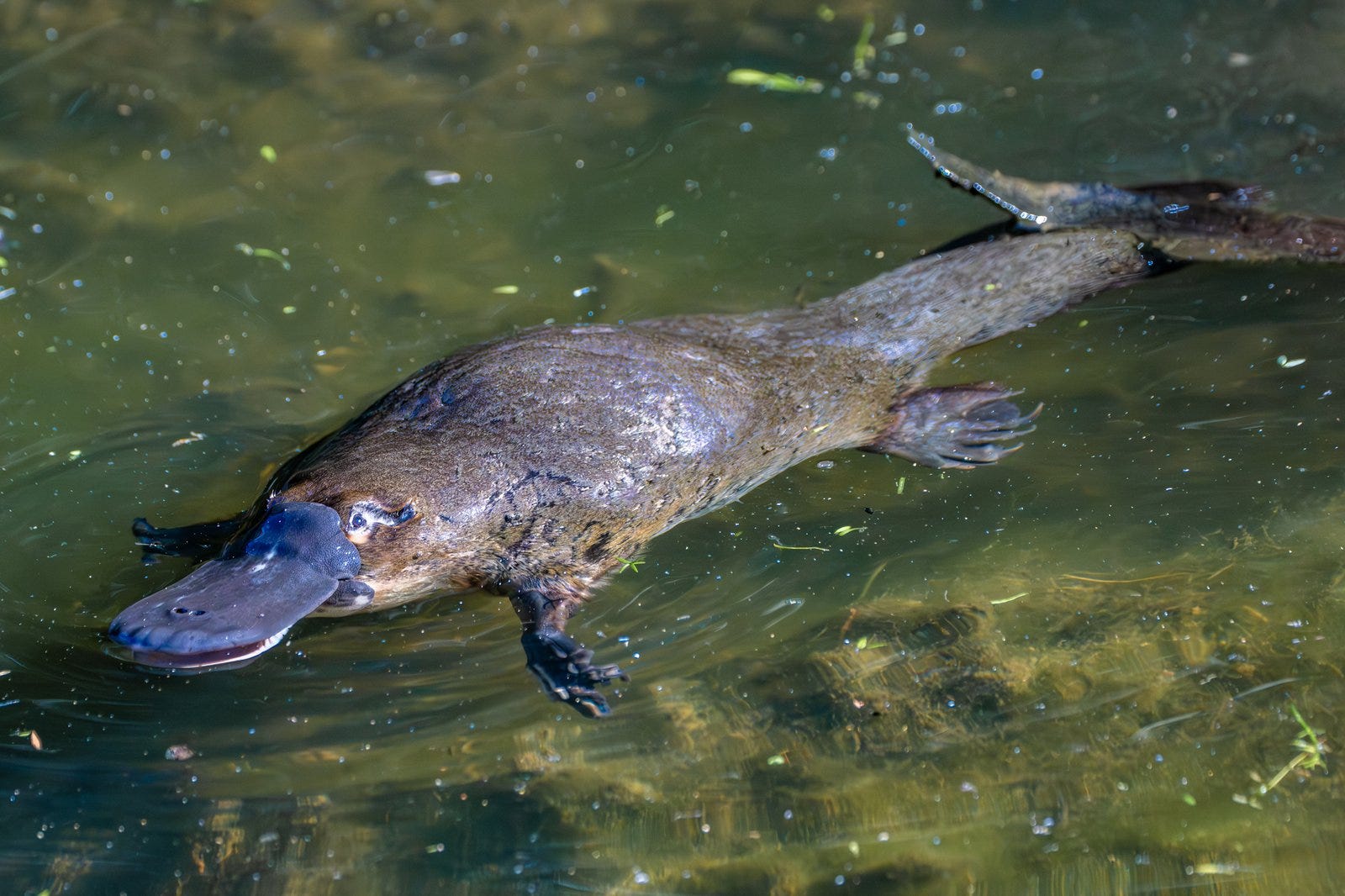
The reason this is important is because it shows that social categories are fundamentally non-essentialist. The big problem with essentialism is that it is always reductionistic. If we want to have helpful social categories, we always have to be open to revising our understanding, changing the set of characteristics, and making exceptions that may seem counter-intuitive at first. This becomes even more important when there is a moral imperative to do so. Maybe a platypus wouldn’t have cared whether they were included in the category “mammal”, but a trans-woman does care whether they are included in the category “woman”.
Gender Dysphoria
With all that said, it might be helpful to explain why all of this social category stuff is important. Much like the platypus demonstrated that the category “mammal” needs revision, we are now being faced with the reality that our understanding of “man” and woman” needs revision.
Side note: When I say “now”, I don’t mean being trans is a new phenomenon. Transgender people have existed in most cultures throughout history. I mean “now” as in, modern Western post-industrialisation capitalist society (buzzwords much?).
Gender dysphoria is when one’s personal identity and gender does not correspond with their gender assigned at birth. At least in my mind, being trans is a response to gender dysphoria. Now I know that it has become common to say that one doesn’t need to experience gender dysphoria to be trans, but I think this is rooted in a reactionary misunderstanding of what gender dysphoria is. Going into detail here would make this already lengthy article even longer, so I suggest everyone checks out The Gender Dysphoria Bible for more info. Nonetheless, if you don’t believe dysphoria is a good word to describe your experience, I’m not here to correct you. You do you!
So, What is a Woman?
Phew, we got here eventually! That was a lot of groundwork, I apologise. Let’s now get to conservative’s favourite question; “what is a woman?”. Setting aside the potentially misogynistic nature of the question (because it’s super important to define a woman, but men can be whatever they want), what does it actually mean to be a woman? Well the right-wingers will be quick to answer; “a human adult female”. As we have discussed however, reducing people down to their reproductive parts is not only super problematic, but also excludes people that they would normally want to include in their definition (e.g. folks with chromosomal anomalies, those who have had their uterus removed, etc). I would instead offer the following definitions:
A woman is a human person who identifies with and embodies enough of the gendered characteristics typically associated with the female sex.
A man is a human person who identifies with and embodies enough of the gendered characteristics typically associated with the male sex.
To be transgender then, is to become a gender other than the one you were assigned at birth. I think these definitions would probably face 3 main questions:
Aren’t you saying that gender and sex are connected?
Isn’t there more than two genders?
How many characteristics is “enough”?
Firstly, no, I am not saying sex and gender are connected. As I explained earlier, sex and gender are distinct categories that function separately from each other. What I am saying however, is gendered attributes are those that society typically associates with one of the sexes. For example, dresses are a gendered item of clothing because we typically associate them with the female sex. Trousers on the other hand, are not gendered, because we no longer see them as being distinctly male clothing.
Secondly, yes, there are more than two genders. Some claim there are 72+ genders, but many of these don’t seem to me to fall into the category of gender per se. For example, abimegender is associated with being profound, deep, and infinite. These may be relevant personal identifiers, but they aren’t gendered in the sense of being specifically associated with one of the sexes (as I have defined above). I would therefore say that broadly, there are 3 genders; man, women, and non-binary. I would define non-binary as;
A non-binary person is a human person who identifies with and embodies enough of the gendered characteristics typically associated with both, or a mix, of the sexes.
This includes a whole variety of sub-categories that fall outside of the binary of man and woman. Thirdly, the question of how many characteristics is “enough” does not have a clear answer. It’s ultimately a matter of phenomenology. If someone has embodied so many attributes that you experience them as a particular gender, or they are giving you lots of clues (verbal, physical, or otherwise) that they wish to be seen as that gender, that should be enough.
If you want to say that this is so vague it’s not useful, you may be committing the ‘fallacy of the beard’.5 This is when one claims that it is impossible to pinpoint the exact moment that stubble becomes a beard, and then declares that therefore, there is no actual difference between them. This is clearly wrong. Even if one cannot say when stubble becomes a beard, we know intuitively that some people do, in fact, have beards.
Conclusion
I hope this article has given you a brief overview of gender metaphysics and given you an understanding of the logical coherency behind transgenderism. If you wish to dig deeper, don’t understand something, or have thought of objections to anything I have said, you can check out part 2 here.
If you are inclined to support me financially, you can become a paid subscriber, or alternatively, you can click the button below to make a one-time donation at ‘Buy Me A Coffee’ (although as a Brit, I prefer tea). Thank you in advance!
Puberty blockers have been used to treat precocious puberty in cis children for decades, and no one complained until they started being used for trans children.
The Cass review has been widely criticised by the transgender community for lacking involvement of actual trans people, and having faulty scientific reason. For example, it criticises the lack of studies done with control groups despite the fact that to suggest such a thing for research into transgender science is patently absurd. Pssst, Hilary Cass, you can’t have control groups for treatments that only apply to a specific selection of people.
TERF is short for ‘trans-exclusionary radical feminist’.
Formally known as ‘Sorites paradox’, but that’s less catchy.
Thanks for writing this, I'm interested to engage charitably and without commitment to some conclusion I have decided upon from the outset.
You say:
"A woman/man is a human person who identifies with and embodies enough of the gendered characteristics typically associated with the female/male sex."
With this as your defenition, you anticipate the objection that this necessarily connects sex with gender and gender with sex; you assert that this is not the case. On the contrary: to define gender as "characteristics which are typically associated with one or another sex" is to define gender dependently on sex and in terms of sex. No sex, no gender. This is far from "distinct categories that function separately from each other," as you say: this is precisely a set of dependent categories, one of which cannot exist without the other. One of these categories is social and about self-and-other recognition, sure: but self-and-other recognition only insofar as these characteristics are conceptually associated with a particular sex. That's just according to the defenitions given.
Now, further: especially in light of the above, it seems premature to neglect to include primary sex characteristics as part of the set of gendered characteristics which are associated with a particular sex. Indeed: tautologically, a primary sex characteristic is a characteristic typically associated with one or the other sex. Ergo the question is begged: why do we single out primary sex characteristics from the other secondary sex characteristics in terms of defining gender? Why this double-plane, two-story building approach? I can see one reason: biological sex describes obvious observable differences in human and animal bodies which determine their ability to participate in mating, a key and critical component of the survival of the species. Secondary sex characteristics can be seen, in light of their dependence on gender, as something like an intricate sexual signaling mechanism, akin to the plumage on a male peacock's back. Because humans are intelligent and exist not merely on the biological but on the cultural level, we have the ability to choose for ourselves (to varying degrees) both our secondary sexual characteristics and even our primary sexual characteristics if we receive certain levels of surgery. We can reassign the "telos" behind certain expressions for our own purposes, rather them being beholden to anything like an innate and binding biological purpose for our bodies and behaviors. The question is always "well, but is that wise?" Would we be better off accepting our bodies and the roles into which we are born and told to play by, or would it be better to reshape our bodies and roles in order to better suit ourselves? The answer of Christianity tends to be "accept the hand you are given, the end is worth the burden of bearing that cross." The answer of the modern world tends to be "your personal comfort is the arbiter of what is right and wrong. If you don't want to look or dress or act like that, don't, as long as you're not hurting anyone or infringing on their innate right to do the same." There's plenty of nuance between those positions but I couldn't get into that here. Suffice to say that I find gender an intriguing connundrum. What are your thoughts?
PS: Before I finish, an interesting wrinkle came to me. Well, at least in the Catholic Church for priests and for both Catholic and Orthodox monastics, these people live lives of complete sexual continence (no sex, not even marriage). Well, in light of gender being associated with sexual characteristics, and sexual characteristics being associated with mating capacity, it seems that Christianity does in fact offer room to define oneself in such a way that does not center mating. This is especially interested because Christianity often only offers those two paths: clerical celibacy for life, or marriage to a spouse in which one can become a householder and raise children. This, beyond all else, is emblematic of the Christian resistance to trans folk: that especially as they modify their bodies, they become less and less likely to be viable parents, and so without inclusion in the clergy, seem to be left with an undefined life path. I imagine that the instant image one might jump to is a life devoted to hedonism. Let's not assume that, but note that if Christianity advocates a life of giving love and sacrifice for another, then the continent clergy and the married laity seems like the two most obvious options to advocate for.
Hi Ben,
This topic is of special interest to me as I have friends and family who are transgender. If someone calls me a hateful transphobe, it just means they are entirely ignorant of who I am.
Your essay is an apologetic for post-modernism, specifically part of the movement to redefine the meanings of male and female. I am astonished at the extent to which this movement has suceeded so far.
Trans ideology is ENTIRELY new to human history. A friend of mine begged to differ. When she lived in rural India in the 1960's she witnessed a transfemale dressed in women's attire among a group of female villagers at a market. Yes, but she KNEW full well it was a man in women's attire. Everyone in the village knew the person was MALE. Yes, these people have long existed in human history.
However, it's only since post-modernism that intellectuals at western universities began to spread a new ideology that male cross-dressers were ACTUAL women. Humans have never been confused about the differences between men and women until very recently.
The categories of male and female, sperm and egg, are immutable, factual truths. This is knowledge we have possessed since prescientific eras. Philosophy has no power to change facts nor the ultimate truth. Transgender ideology may persist and even advance in society through mendacious psychological campaigns targeting youth by the powers that be. Transhumanism may even come as well. Only the words of Jesus Christ will remain in the end.